My
Story
The Life I Was Given
I didn’t grow up free. I grew up in a world where control was called love, fear often disguised itself as care, and asking questions didn’t feel safe.
As a little girl, I remember feeling confused more than anything else. I was always trying to make sense of the world around me, but so much of what I was taught didn’t seem to fit together. I couldn’t understand why love felt so frightening. I didn’t know why belonging felt so conditional. It didn’t feel safe to ask honest questions.
So instead of questioning the world around me, I quietly assumed there must be something wrong with me.
That belief followed me into adulthood.
I became the good girl. The people pleaser. The one who tried hard, did the right things, and hoped that if I loved enough, believed enough, and worked hard enough, I would finally feel safe.
Then I met Trent.
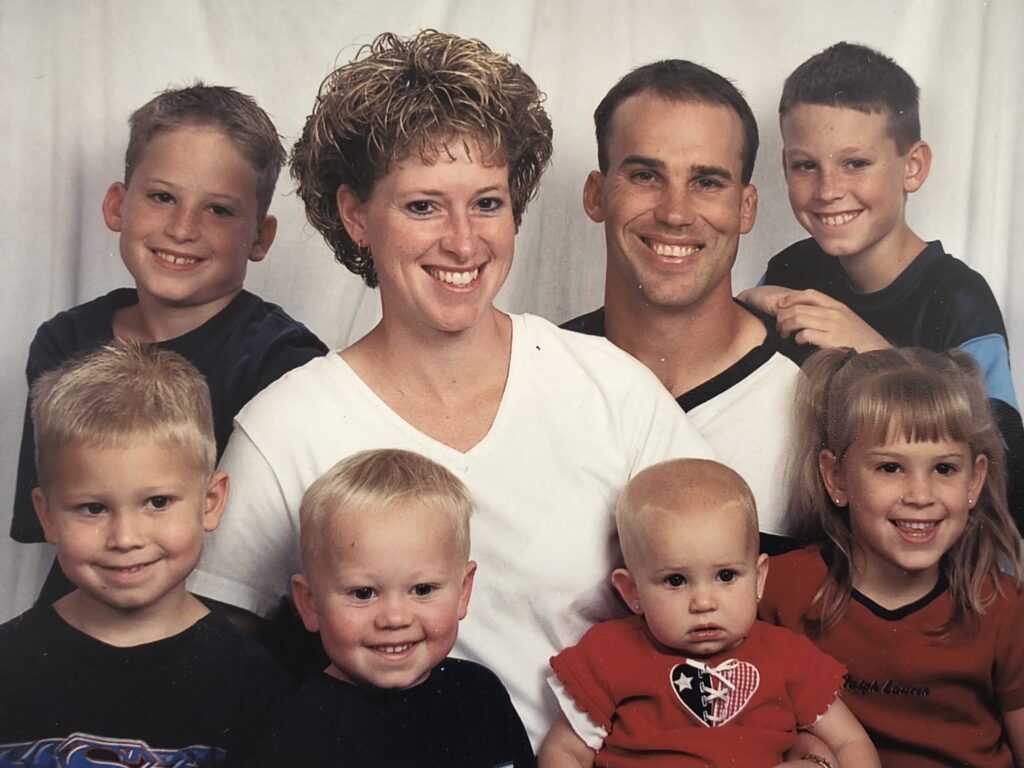
We were high school sweethearts who married young and built a beautiful life together. We raised six children, served in church leadership, taught marriage classes, and genuinely believed we had found the path we were meant to follow.
And in many ways, it was a beautiful life.
Until life began asking questions our beliefs could no longer answer.
When Everything Broke Open
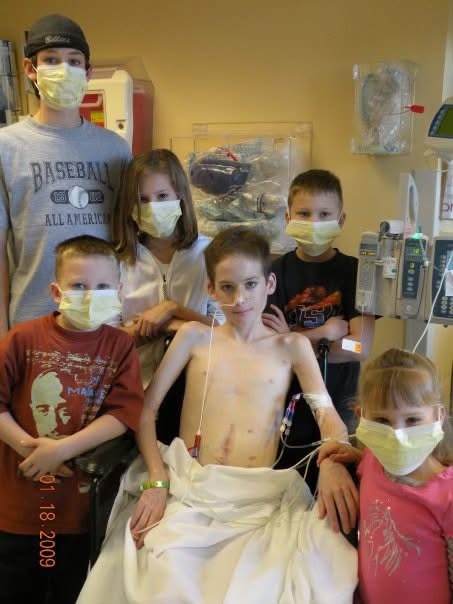
When our twelve-year-old son, Cole, became critically ill, everything changed. We spent three years fighting for his life while trying to hold onto a faith that no longer made sense of what we were living.
Instead of compassion, we were often met with blame. Instead of comfort, we were given explanations that only deepened our pain.
When Cole died, we didn’t just lose our son. We lost the beliefs that had carried us for so many years. We walked away from the only spiritual home we had ever known—not in rebellion, but in heartbreak.
And then something unexpected happened.
Instead of searching for new answers, we began asking better questions.
For the first time, we gave ourselves permission to wonder whether some of the things we had been taught about God, suffering, marriage, sexuality, and what it meant to be “good” were actually true.
We didn’t know where those questions would lead us.
We only knew we could no longer pretend the old answers still worked.
We Started Asking Different Questions
After Cole died, Trent and I stopped trying to force our lives back into the beliefs we had been given.
We started reading. Talking. Questioning.
We looked differently at God, scripture, sexuality, marriage, and the rules we had assumed were absolute.
Some of those conversations were terrifying.
Some were freeing.
And some opened doors we never expected.
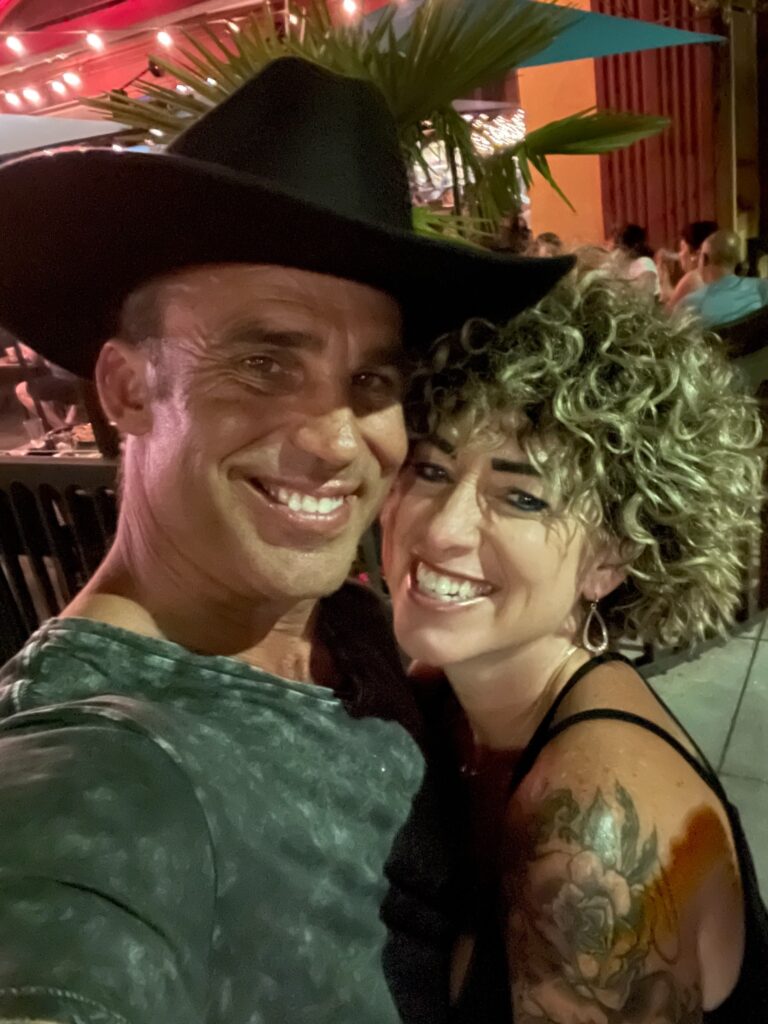
We explored tantra. We talked about fantasies we had never said out loud. We went to a nude beach. We began asking what honesty, desire, freedom, and commitment could look like inside a marriage that was still deeply ours.
Eventually, we opened our marriage.
Not because our marriage was broken.
Because we were becoming more honest inside it.
That choice brought excitement, vulnerability, fear, jealousy, growth, mistakes, and a completely different kind of communication.
We did not have a blueprint.
We were learning as we went.
But for the first time, we were not simply following the rules we had inherited.
We were choosing.
Becoming More Fully Human
We weren’t chasing novelty.
We were chasing aliveness.
The questions Trent and I began asking changed far more than our marriage. They changed the way we understood faith, relationships, sexuality, grief, freedom, and ourselves.
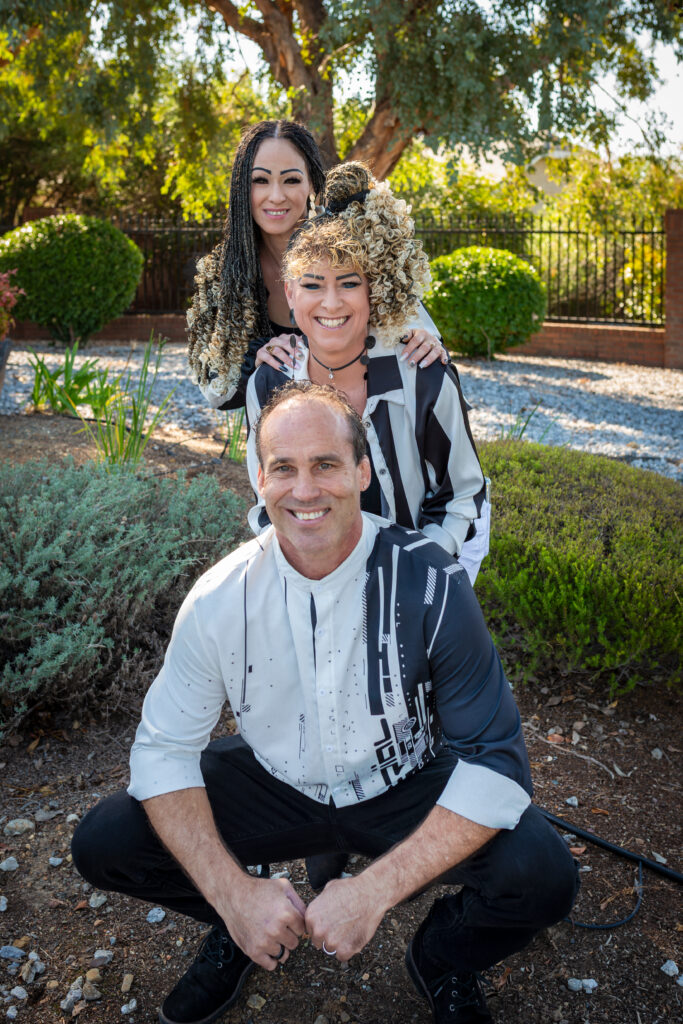
That journey eventually led us into ethical non-monogamy and, for a season, into life as a throuple.
Living and loving as three people stretched us in ways we could not have predicted. It brought joy, intimacy, complexity, mistakes, growth, and a much deeper understanding of what it means to love without disappearing.
It also forced us to confront assumptions—our own and everyone else’s.
We learned that unconventional does not automatically mean unhealthy. That love can be real even when a relationship changes form. And that the most important questions are not how many people are in a relationship, but whether there is honesty, consent, agency, care, and room for each person to remain fully themselves.
That chapter eventually led us into reality television, writing, public conversations, and experiences we never could have imagined when we were younger.
But more importantly, it led us back to ourselves.
Today, I don’t claim to have life figured out.
I write because I know what it is like to live inside answers that no longer fit.
I share my story because shame loses some of its power when we stop hiding.
And I create spaces for honest conversations because I believe people deserve room to question, change, grow, and tell the truth about their own lives.
My life looks very different than the one I once believed I was supposed to live.
It is also more honest.
More embodied.
More complicated.
More free.
And far more mine.
I’m still becoming.
I think we all are.
And maybe becoming more fully human begins when we stop asking whether our lives look right from the outside—and start asking whether they are true on the inside.